 Stock Collections
 Axminster Archive
 Express Collection
 Bespoke Design Service
 Area Rugs
 Heritage
 Local Supply
 News
News Meet our Team
Blog
A Natural History of Colour
Before We Had Names for Colour
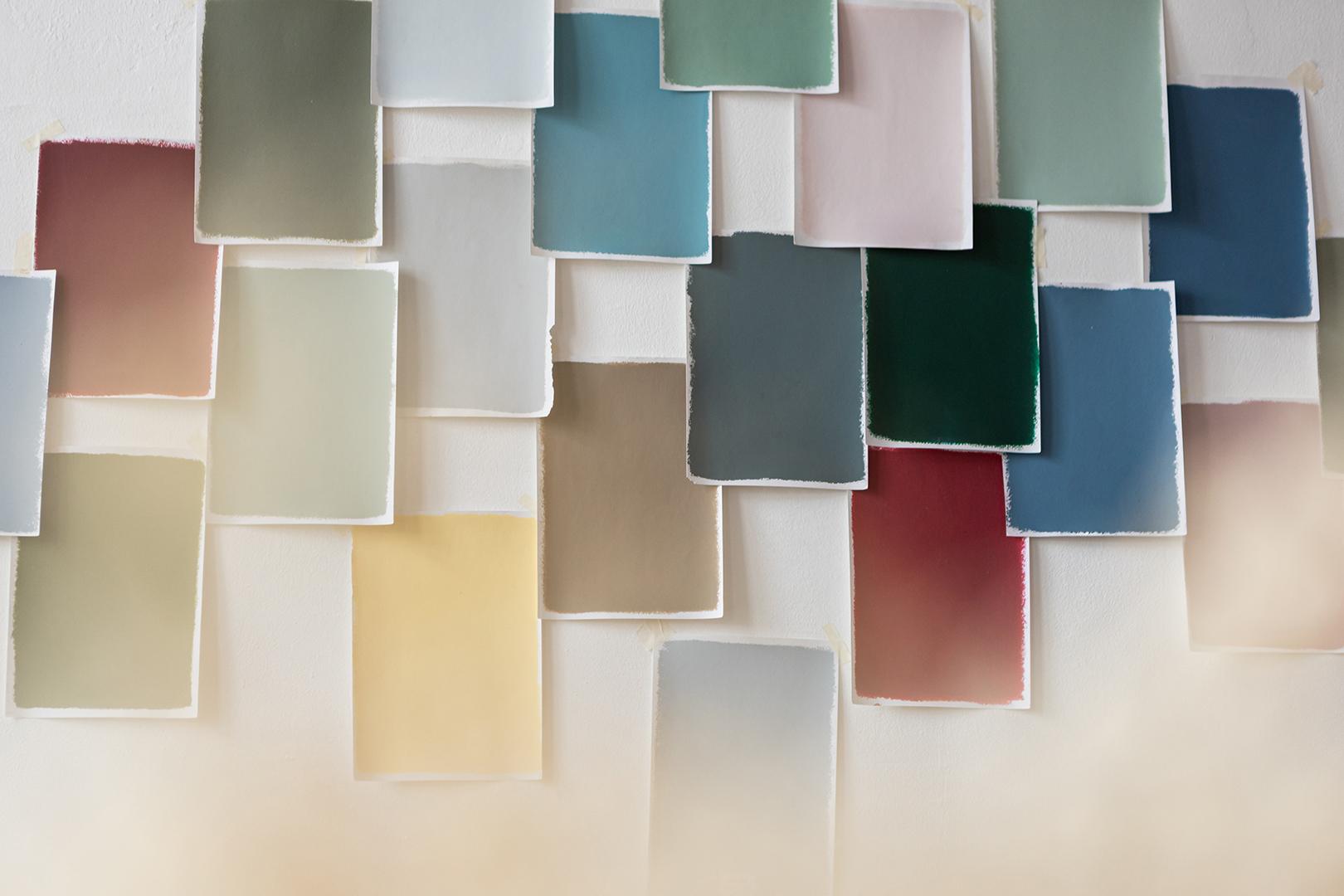
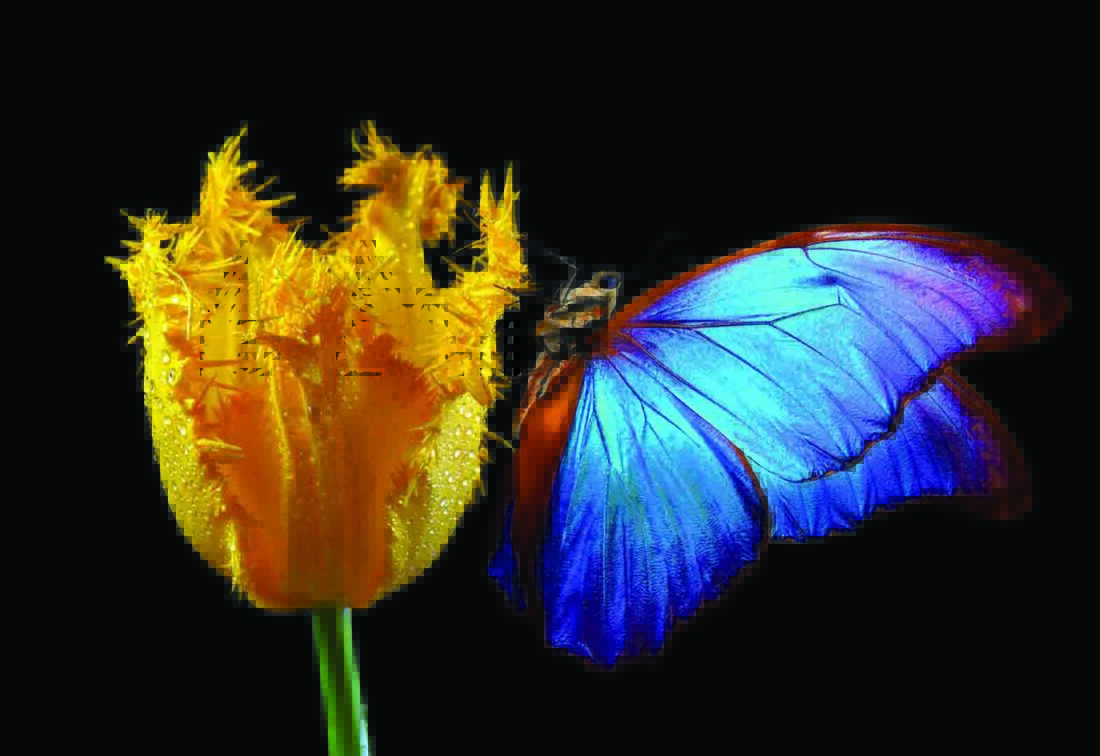
Long before colour charts, paint manufacturers and digital colour libraries, colour was simply part of the natural world.
It was there in the red of iron-rich earth, the deep green of leaves, the blue of minerals, the iridescence of shells and the vivid markings of birds and insects. For early humans, colour wasn’t something that had to be invented. It was something to be observed, collected and, eventually, captured.
Our relationship with colour began with nature itself.
The First Palette
The first palette was not manufactured. It was found.
Earth, stone and mineral deposits provided some of the earliest sources of colour.
Ochres offered warm yellows, oranges and reds, while minerals such as hematite provided rich red pigments.
Ground into powders and mixed into paints and pastes, these colours were used to decorate objects, mark bodies and create images.
But colour was never simply decorative.
It could carry meaning, communicate identity and transform the objects and spaces around us.
As civilisations developed, so did the search for new colours.
Some were discovered in nature. Others required ingenuity.
Ancient Egypt provides one of the earliest examples of humans deliberately creating a pigment rather than simply finding one.
Egyptian blue marked an important moment in the history of colour.
We were beginning to move beyond the colours nature provided. We were learning how to create our own.
Nature’s Extraordinary Colour Library
But the earth was only one source.
Some of the most remarkable colours in history came from the living world — from plants, insects and even creatures beneath the sea.
Indigo provided rich blues. Madder roots produced reds. Cochineal, derived from scale insects, created vivid shades ranging from delicate pinks to deep crimson.
Then there was purple.
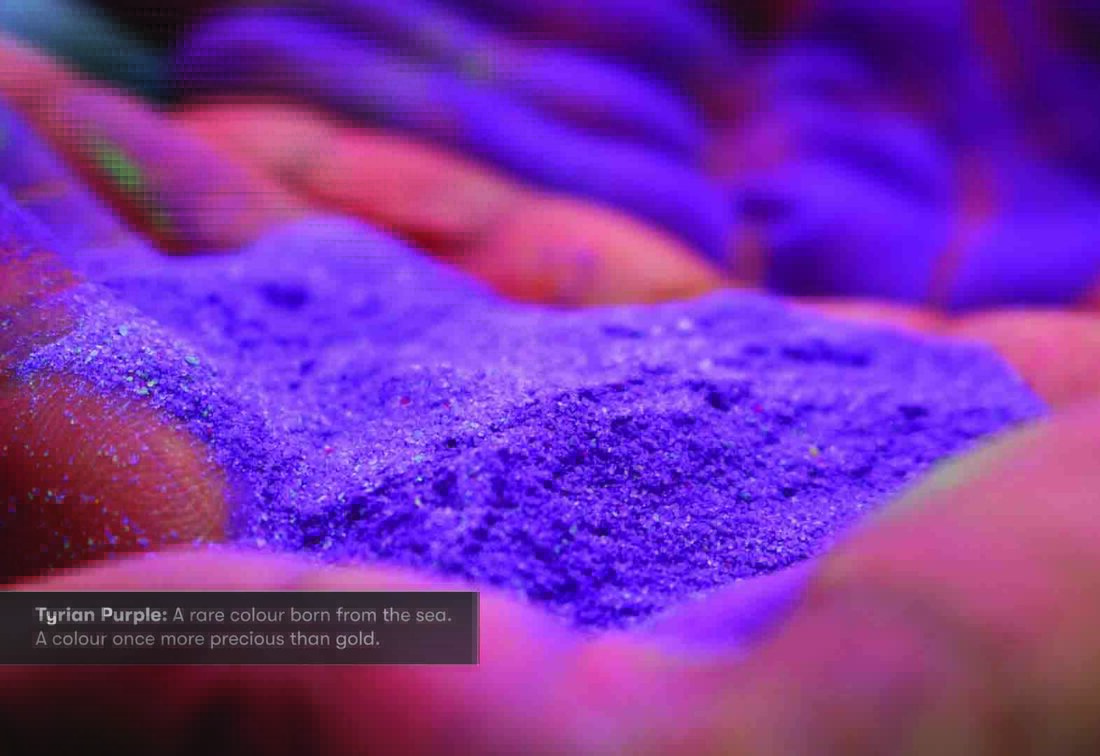
Tyrian purple was created from the secretions of certain marine molluscs. The process was exceptionally labour-intensive, and the resulting colour extraordinarily valuable.
Its rarity helped turn purple into a symbol of wealth, status and power.
These colours reveal something fascinating about our relationship with colour.
Colour has never been simply about appearance.
Its rarity could make it precious. Its origins could give it meaning. And the difficulty involved in producing a particular shade could make it even more desirable.
For centuries, people searched the natural world for colour.
Plants were cultivated. Minerals were ground. Insects were harvested. Shells were collected.
Nature was, in effect, humanity’s first colour library.
But there was still a challenge.
We could find a colour.
We could reproduce it.
But how could we describe it to someone else?
Giving Colour a Language
Describing colour with words alone has always been surprisingly difficult.
What one person calls blue, another might describe as green. A colour can appear different in changing light, against another background or when viewed on a different material.
For artists, scientists and naturalists, this presented a real problem.
How could a particular shade be accurately recorded and communicated?
In the eighteenth century, German mineralogist Abraham Gottlob Werner attempted to create a solution.
His system for classifying mineral colours provided a shared vocabulary — an early attempt to turn colour into a language.
More than four decades later, Scottish flower painter Patrick Syme expanded Werner’s work considerably.
In 1814, Syme published Werner’s Nomenclature of Colours, introducing painted colour samples alongside descriptions of where each shade could be found in the natural world.
A colour might be identified through a mineral, a flower or the feathers of a bird.
And some of the names were wonderfully evocative.
Back of Nuthatch.
Beauty Spot on Wing of Teal Drake.
Snow White.
Pansy Purple.
Colour was no longer simply brown, blue or green.
It had a point of reference.
Something tangible.
Something another person could recognise.
In many ways, Syme had created an early colour library — one inspired entirely by nature.
A Colour Library Travels the World
In 1831, a small book of painted colour samples sailed out of England aboard HMS Beagle.
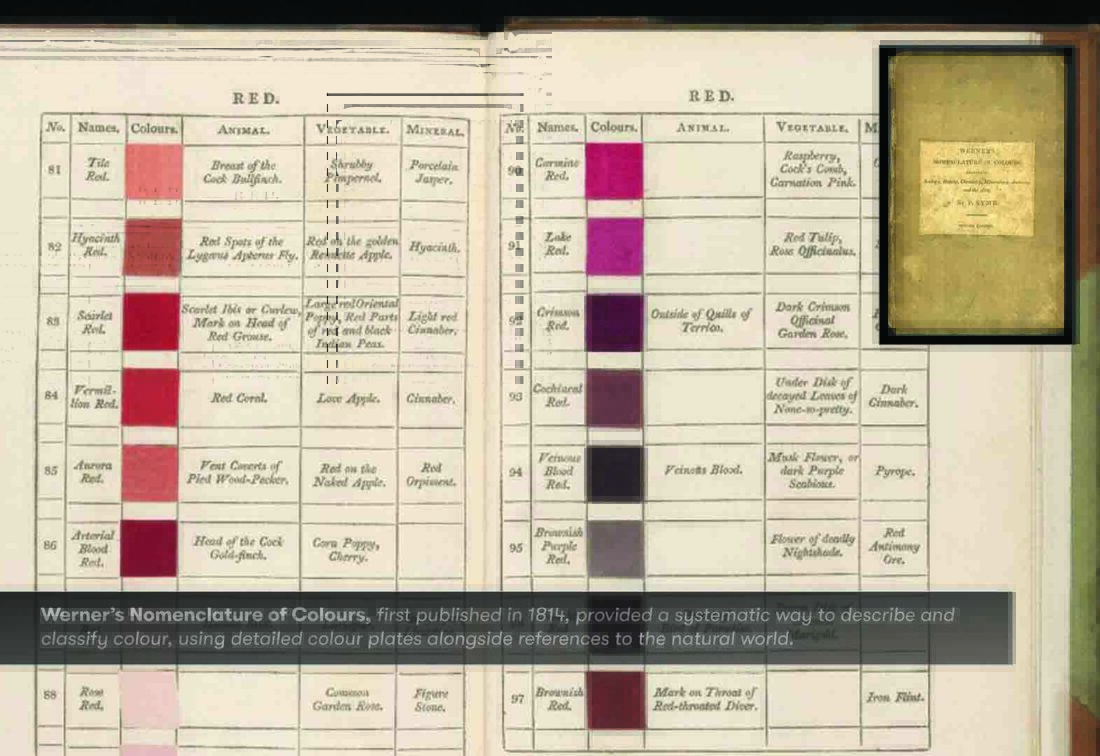
Among Charles Darwin’s possessions was Patrick Syme’s Werner’s Nomenclature of Colours.
During his five-year voyage, Darwin used its terminology to record the remarkable variety of plants, animals, rocks and landscapes he encountered.
For a naturalist working far from home, this was more than a collection of colour samples.
It was a shared vocabulary.
Instead of relying solely on descriptions such as bluish-green or reddish-brown, Darwin could compare what he saw with defined samples and recognised names.
Colour became another form of observation.
Something that could be recorded. Compared. Communicated.
But even with names and painted samples, colour remained elusive.
Light could alter its appearance. Materials could fade. And two people might still perceive the same shade differently.
As science and manufacturing advanced, the need for something more precise became increasingly important.
The story of colour was moving from observation towards measurement.
From Nature to Manufacture
For thousands of years, colour had been gathered from the natural world.
Then chemistry opened a new chapter.
In 1856, eighteen-year-old English chemist William Henry Perkin accidentally discovered mauvine, the first commercially successful synthetic dye.
Suddenly, colours that had once been rare, expensive or difficult to obtain could be manufactured on an unprecedented scale.
Colour was no longer simply something we discovered. We could create it.
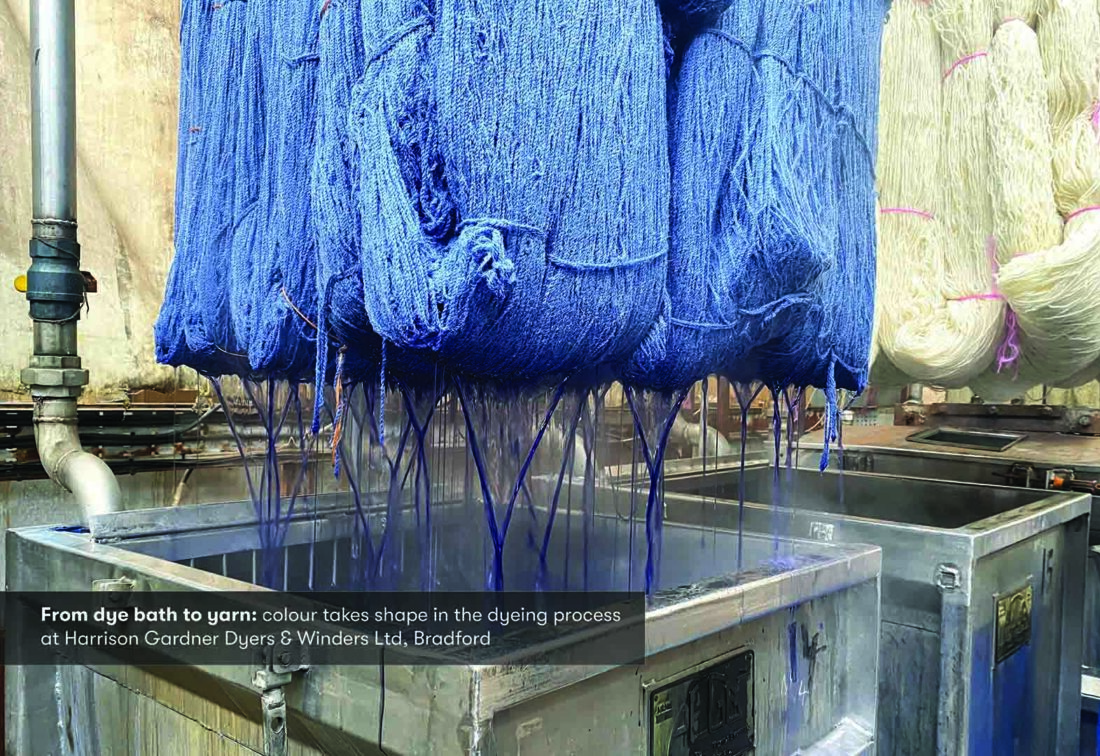
As colour moved increasingly into laboratories and factories, another challenge emerged.
How could it be reproduced consistently?
A designer needed to specify a particular shade. A manufacturer needed to recreate it accurately.
Simply giving colour a name was no longer enough.
The Science of Colour
In the early twentieth century, colour systems became increasingly systematic and measurable.
Albert Henry Munsell’s system organised colour according to three dimensions: hue, value and chroma.
In simple terms:
What colour is it?
How light or dark is it?
How strong or muted is it?
It was another attempt to answer a question that had occupied artists, scientists and naturalists for generations.
How do we describe something the eye can see, but words alone struggle to define? The answer was increasingly found in numbers, samples and standards.
Today, Pantone provides designers and manufacturers with a shared language for colour — helping turn an idea into something that can be clearly communicated and reproduced.
Colour had travelled a remarkable distance.
From the earth beneath our feet and the plants growing around us, to carefully calibrated systems designed to define and reproduce almost every imaginable shade.
And yet, even the most precise colour system can only describe colour.
It cannot recreate the extraordinary subtlety of the natural world.
The gentle variation within a landscape.
The changing tones of natural materials.
The way colours evolve alongside one another.
And perhaps that is where the story comes full circle.
Colour, Naturally
Today, we have the technology to create almost any colour imaginable.
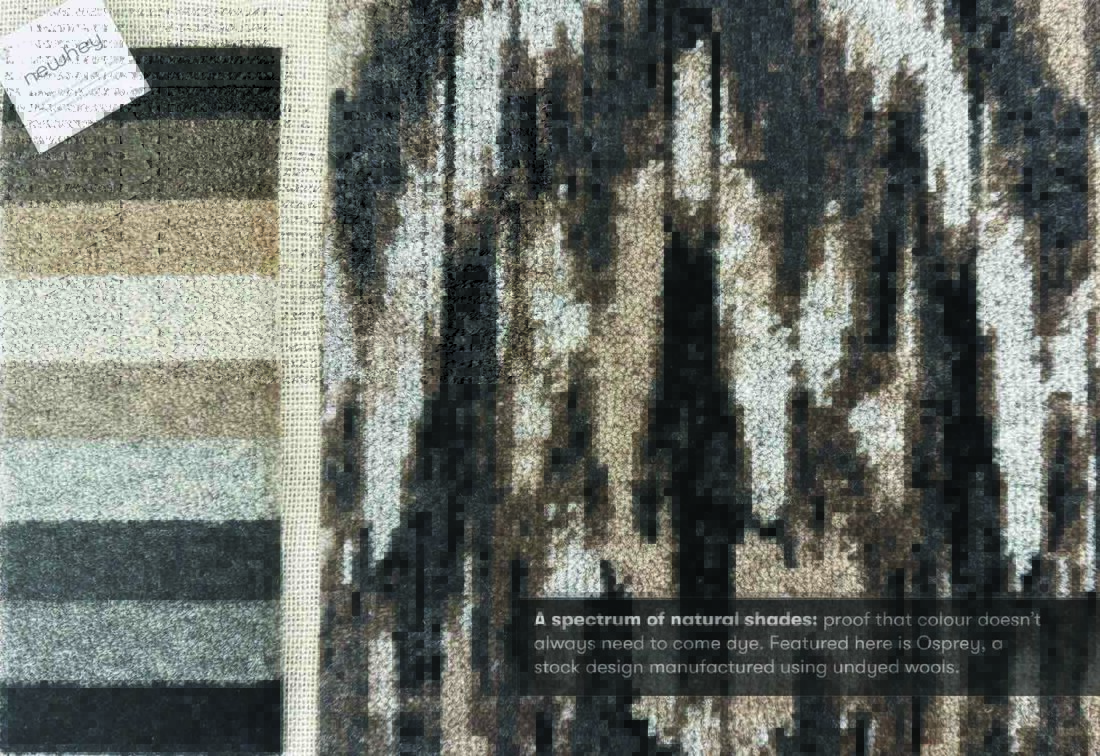
Yet some of the most beautiful colours are those that require no artificial colour at all. Wool is a remarkable example.
Sheep naturally produce fleeces in an extraordinary range of shades, from soft creams and warm greys to deeper browns and rich charcoal tones.
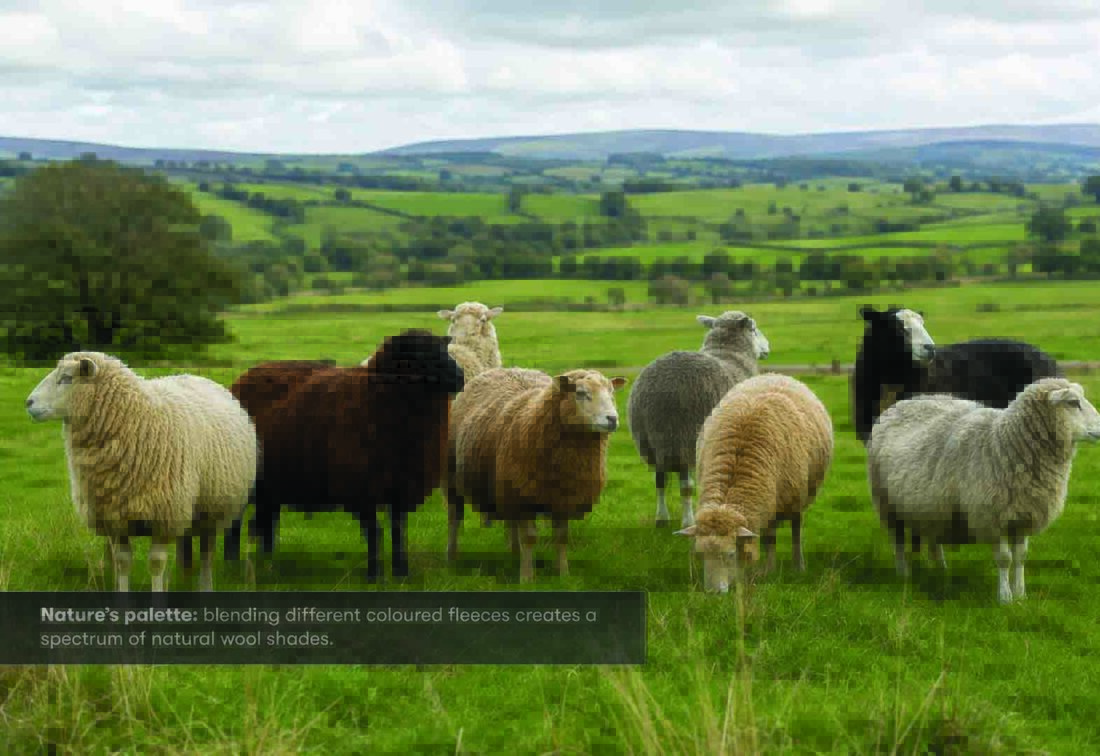
These natural variations do not need to be hidden.
They can become the starting point for a palette in their own right.
By carefully blending different naturally coloured fleeces before they are spun into yarn, we can manufacture carpet using the colours nature provides, reducing the need to dye the wool to a predetermined shade.
The result is a carpet with depth.
Subtle variation.
A natural character that remains visible within the yarn itself.
It is an approach that celebrates the natural beauty of wool while offering a more considered way of creating colour.
There is something wonderfully circular about this approach.
Our earliest ancestors looked to nature for colour.
Centuries later, naturalists developed systems to name and describe it.
Chemistry taught us how to manufacture it.
Modern technology taught us how to measure it with extraordinary precision.
And yet, after all that progress, there is still something compelling about simply working with the colour nature provides.
Perhaps colour does not always need to be invented.
Sometimes, it simply needs to be noticed.